
The Rise of AI: Exploring the Boundless Potential of Artificial Intelligence
Let’s dive into the world of artificial intelligence (AI), which isn’t some far-off sci-fi concept anymore. It’s here, and it’s changing things in ways we’re only just beginning to truly grasp. Think of it as a powerful toolkit that can learn, solve problems, and even make decisions, mimicking some aspects of human intelligence. The big question on many minds is whether AI is a force for good, and the answer is nuanced: it holds immense potential to improve our lives, but we also need to be mindful of how we use it.
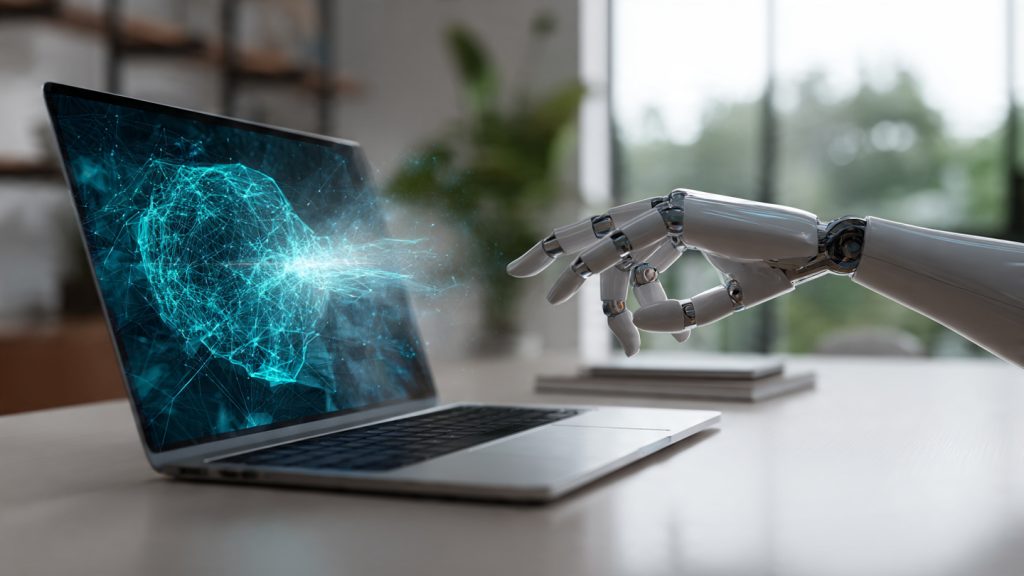
AI has moved beyond the lab and is actively transforming numerous sectors, often in subtle but significant ways. It’s not just about robots taking over; it’s about smart systems that augment human capabilities and streamline complex processes.
Contents
- 0.1 Streamlining Operations: Efficiency Through Data
- 0.2 Enhancing Decision-Making: Insights from Data
- 0.3 Shifting Skillsets: The Demand for Human-AI Collaboration
- 0.4 Redefining Productivity: Working Smarter, Not Just Harder
- 0.5 Fairness and Bias: Ensuring AI is Equitable
- 0.6 Accountability and Responsibility: Who’s in Charge?
- 0.7 Sharpening Diagnosis: Detecting Disease Earlier and More Accurately
- 0.8 Personalizing Treatment: Tailoring Care to the Individual
- 0.9 Optimizing Resource Management: Making Smarter Use of What We Have
- 0.10 Environmental Monitoring and Prediction: Understanding Our Planet Better
- 0.11 Advancements in Learning and Reasoning: Towards More Sophisticated AI
- 0.12 Societal Implications: A World Transformed
- 1 FAQs
- 1.1 1. What is artificial intelligence (AI) and how does it work?
- 1.2 2. How is AI revolutionizing industries and impacting the future of work?
- 1.3 3. What are the ethical considerations in the development and implementation of AI?
- 1.4 4. How is AI transforming healthcare, environmental sustainability, transportation, cybersecurity, and customer experiences?
- 1.5 5. What are the predictions and possibilities for the future of AI?
Streamlining Operations: Efficiency Through Data
- Manufacturing: AI algorithms analyze production lines to identify bottlenecks, predict equipment failures before they happen (predictive maintenance), and optimize resource allocation, leading to substantial cost savings and increased output.
- Logistics: From optimizing delivery routes to managing warehouse inventories, AI plays a crucial role in the smooth flow of goods. It can predict demand fluctuations, reroute shipments in real-time due to unforeseen events, and ensure timely deliveries.
- Customer Service: Chatbots powered by AI handle routine customer inquiries 24/7, freeing up human agents for more complex issues. These bots learn from interactions to improve their responses over time.
Enhancing Decision-Making: Insights from Data
- Finance: AI algorithms sift through vast amounts of financial data to detect fraudulent transactions, assess credit risk, and even make trading decisions. This helps financial institutions operate more securely and efficiently.
- Retail: AI analyzes customer purchasing patterns to personalize product recommendations on e-commerce sites, optimize pricing strategies, and manage inventory more effectively, ultimately leading to better customer experiences and increased sales.
- Research and Development: In fields ranging from drug discovery to materials science, AI can process and analyze complex datasets at speeds far beyond human capacity, accelerating the pace of innovation.
The integration of AI into the workplace is sparking conversations about job displacement and the emergence of new roles. It’s less about a wholesale replacement of humans and more about a fundamental shift in how we work.
Shifting Skillsets: The Demand for Human-AI Collaboration
- Augmentation, Not Automation: Many jobs won’t disappear but will evolve. AI will handle repetitive or data-intensive tasks, allowing humans to focus on creativity, critical thinking, emotional intelligence, and complex problem-solving.
- New Job Categories: We’re seeing the rise of roles like AI trainers, data scientists, AI ethicists, and AI system managers. These positions require a deep understanding of AI’s capabilities and limitations.
- Continuous Learning: The ability to adapt and learn new skills will be paramount. Upskilling and reskilling programs will become increasingly important for individuals and organizations alike.
Redefining Productivity: Working Smarter, Not Just Harder
- Personalized Workflows: AI tools can help individuals manage their time more effectively, prioritize tasks, and even automate certain administrative functions, boosting individual productivity.
- Collaborative Intelligence: AI can act as a co-pilot, providing insights and suggestions during creative processes or complex analyses, leading to more innovative outcomes.
- Accessibility: AI-powered tools can make workplaces more accessible for individuals with disabilities, for example, through advanced speech-to-text or visual assistance technologies.
As AI becomes more powerful, so does the importance of considering the ethical implications of its development and deployment. It’s a crucial conversation to ensure AI benefits society as a whole.
Fairness and Bias: Ensuring AI is Equitable
- Algorithmic Bias: AI systems learn from the data they are fed. If that data reflects existing societal biases (related to race, gender, socioeconomic status, etc.), the AI can perpetuate and even amplify those biases in its decisions.
- Mitigation Strategies: Researchers and developers are working on techniques to identify and reduce bias in AI algorithms, through data cleansing, algorithmic fairness metrics, and diverse development teams.
- Transparency and Explainability: Understanding why an AI made a particular decision is crucial, especially in high-stakes applications like loan applications or criminal justice. Efforts are underway to make AI systems more transparent and explainable.
Accountability and Responsibility: Who’s in Charge?
- Decision-Making Authority: When an AI makes a mistake, especially one with significant consequences, determining who is responsible can be challenging. Is it the developer, the deployer, or the AI itself?
- Legal and Regulatory Frameworks: Societies are grappling with how to establish legal and regulatory frameworks that address AI’s unique challenges, ensuring accountability without stifling innovation.
- Human Oversight: In many critical applications, retaining human oversight and the ability to override AI decisions remains essential for ensuring safety and ethical outcomes.
The impact of AI on healthcare is nothing short of revolutionary, promising to improve diagnosis, personalize treatments, and ultimately save lives.
Sharpening Diagnosis: Detecting Disease Earlier and More Accurately
- Medical Imaging Analysis: AI algorithms can analyze X-rays, CT scans, MRIs, and other medical images with incredible speed and accuracy, often spotting subtle anomalies that a human eye might miss. This can lead to earlier detection of diseases like cancer.
- Pathology and Genomics: AI can help analyze vast amounts of genomic data to identify genetic predispositions to diseases or to understand the underlying mechanisms of illnesses.
- Predictive Diagnostics: By analyzing patient data, AI can help predict the likelihood of an individual developing certain conditions, enabling proactive interventions.
Personalizing Treatment: Tailoring Care to the Individual
- Drug Discovery and Development: AI is accelerating the process of identifying potential drug candidates and predicting their effectiveness, leading to faster development of new therapies.
- Treatment Plan Optimization: AI can analyze a patient’s unique medical history, genetic makeup, and lifestyle to recommend the most effective and personalized treatment plan, minimizing side effects.
- Remote Patient Monitoring: AI-powered wearable devices and sensors allow for continuous monitoring of patients’ vital signs and recovery progress, enabling timely interventions and reducing the need for frequent hospital visits.
AI presents powerful opportunities to address environmental challenges, but its own energy consumption also needs careful consideration.
Optimizing Resource Management: Making Smarter Use of What We Have
- Energy Efficiency: AI can optimize the power grids, predict energy demand, and manage renewable energy sources more effectively, reducing waste and improving grid stability.
- Precision Agriculture: AI-powered systems can monitor crop health, soil conditions, and weather patterns to optimize irrigation and fertilization, reducing water and pesticide usage.
- Waste Management: AI can analyze waste streams, sort recyclables more efficiently, and help optimize collection routes, leading to cleaner cities and reduced landfill waste.
Environmental Monitoring and Prediction: Understanding Our Planet Better
- Climate Modeling: AI is crucial for developing more accurate climate models, helping us understand the complex interactions within Earth’s systems and predict future climate scenarios.
- Biodiversity Tracking: AI can analyze satellite imagery and sensor data to monitor wildlife populations, track deforestation, and identify areas at risk of environmental degradation.
- Pollution Detection and Control: AI systems can monitor air and water quality in real-time, identifying pollution sources and helping authorities implement targeted control measures.
Predicting the future is always tricky, but the trajectory of AI suggests a continued integration into almost every facet of our lives, with both fascinating possibilities and critical challenges ahead.
Advancements in Learning and Reasoning: Towards More Sophisticated AI
- General AI (AGI): While current AI systems are largely specialized (good at one task), the pursuit of Artificial General Intelligence (AGI) – AI that can understand, learn, and apply knowledge across a wide range of tasks at a human level – continues.
- Reinforcement Learning: AI systems learning through trial and error and rewards are becoming increasingly sophisticated, enabling them to master complex games and robotic control.
- Natural Language Processing (NLP): AI’s ability to understand and generate human language will continue to improve, leading to more intuitive and seamless interactions with technology.
Societal Implications: A World Transformed
- Personalized Education: AI could tailor learning experiences to individual student needs, pace, and learning styles, revolutionizing education.
- Creative Partnerships: AI might become a collaborative partner for artists, musicians, and writers, pushing the boundaries of creative expression.
- Scientific Breakthroughs: The combination of AI’s analytical power and human ingenuity holds the promise of solving some of humanity’s most pressing challenges, from disease to climate change. However, navigating the ethical considerations and ensuring equitable access to these advancements will be crucial as AI’s boundless potential continues to unfold.
FAQs
1. What is artificial intelligence (AI) and how does it work?
Artificial intelligence (AI) refers to the simulation of human intelligence in machines that are programmed to think and act like humans. This includes tasks such as learning, problem-solving, and decision-making. AI works through algorithms and data to analyze patterns, make predictions, and automate processes.
2. How is AI revolutionizing industries and impacting the future of work?
AI is revolutionizing industries by automating repetitive tasks, improving efficiency, and enabling new capabilities such as predictive analytics and personalized experiences. However, it also raises concerns about job displacement and the need for upskilling and reskilling the workforce to adapt to the changing landscape.
3. What are the ethical considerations in the development and implementation of AI?
Ethical considerations in AI development and implementation include issues such as bias in algorithms, privacy concerns, transparency in decision-making processes, and the potential for misuse of AI technologies. It is important to address these ethical considerations to ensure the responsible and beneficial use of AI.
4. How is AI transforming healthcare, environmental sustainability, transportation, cybersecurity, and customer experiences?
AI is transforming healthcare by enabling more accurate diagnosis and treatment of diseases through advanced data analysis and personalized medicine. It is also advancing environmental sustainability by optimizing resource usage and predicting environmental changes. In transportation, AI is driving innovations such as autonomous vehicles and traffic management systems. However, it also presents challenges in cybersecurity, as AI can be used for both defending against and perpetrating cyber attacks. Additionally, AI is enhancing customer experiences by enabling personalized recommendations and efficient customer service.
5. What are the predictions and possibilities for the future of AI?
The future of AI holds possibilities such as further advancements in autonomous systems, robotics, and natural language processing. Predictions include the integration of AI into various aspects of daily life, the continued debate on AI ethics and regulations, and the potential for AI to address complex global challenges.

With over 5 years of experience in digital learning and productivity, we specialize in creating practical and easy-to-follow solutions.Our expertise focuses on simplifying complex concepts into clear, actionable strategies for everyday use.We are committed to helping learners and professionals improve efficiency, build skills, and achieve consistent growth.