
The Science Behind Biometric Technology: How It’s Changing the Game
Biometric technology uses your unique physical or behavioral traits to verify your identity. Think about it: your fingerprints, the way your face looks, or even how you walk—these are things that are inherently you. This technology is moving beyond sci-fi movies and is already woven into our daily lives, making everything from unlocking your phone to accessing sensitive financial information more secure and convenient.
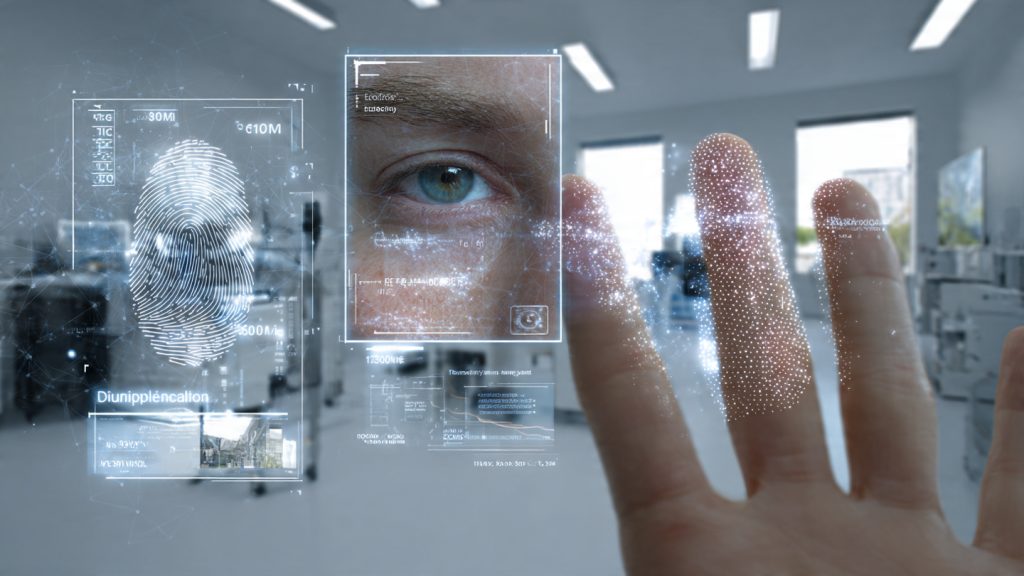
At its core, biometric technology is all about measuring and analyzing unique human characteristics. It’s not about passwords you have to remember or keys you can lose; it’s about tapping into what makes you, well, you. The process generally involves three main steps: enrollment, storage, and matching. When you first use a biometric system, it enrolls your unique trait—like scanning your fingerprint. This data is then converted into a digital template and stored securely. Later, when you need to authenticate yourself, the system captures your trait again, converts it to a template, and compares it to the stored one. If there’s a match, you’re in!
Contents
- 0.1 Types of Biometrics: Physical vs. Behavioral
- 0.2 How Enrollment Works
- 0.3 The Matching Process
- 0.4 Early Days: The Birth of Fingerprinting
- 0.5 The Digital Revolution
- 0.6 Miniaturization and Accessibility
- 0.7 The Rise of Facial Recognition
- 0.8 Multi-Modal Biometrics: Combining Strengths
- 0.9 Enhanced Security for Devices
- 0.10 Secure Access to Facilities
- 0.11 Streamlining Authentication Processes
- 0.12 Preventing Identity Theft
- 0.13 Two-Factor and Multi-Factor Authentication
- 0.14 Accurate Patient Identification
- 0.15 Securing Patient Records
- 0.16 Streamlining Access to Medical Devices
- 0.17 Preventing Healthcare Fraud
- 0.18 Enhancing Telemedicine Security
- 0.19 Secure Access to Accounts
- 0.20 Authorizing Transactions
- 0.21 Preventing Fraudulent Activities
- 0.22 Customer Onboarding
- 0.23 ATM Access and Payments
- 0.24 Criminal Identification and Databases
- 0.25 Surveillance and Real-Time Identification
- 0.26 Border Security and Immigration
- 0.27 Evidence Analysis
- 0.28 Access Control to Secure Facilities
- 0.29 Improved Accuracy and Reduced Spoofing
- 0.30 Greater Integration and Seamlessness
- 0.31 New Biometric Modalities
- 0.32 AI and Machine Learning Enhancements
- 0.33 Privacy-Preserving Biometrics
- 0.34 Data Security and Potential for Misuse
- 0.35 Surveillance and Loss of Anonymity
- 0.36 Bias in Algorithms
- 0.37 Consent and Control Over Data
- 0.38 The “Can’t Change Your Face” Problem
- 0.39 Unlocking Your Smartphone and Tablet
- 0.40 Secure Payments and App Access
- 0.41 Wearable Devices and Fitness Trackers
- 0.42 Laptops and Computer Access
- 0.43 Smart Home Devices
- 0.44 Enhanced Convenience and Efficiency
- 0.45 Personalization and Customized Experiences
- 0.46 New Forms of Interaction
- 0.47 Driving Innovation in Various Sectors
- 0.48 The Ongoing Conversation About Trust and Privacy
- 1 FAQs
Types of Biometrics: Physical vs. Behavioral
Biometrics can be broadly categorized into two main types. Physical biometrics are based on your body’s unique features. This is probably what comes to mind first when you hear “biometrics.” Then there are behavioral biometrics, which focus on your unique patterns of action. It’s less about what you are and more about how you do things.
Physical Biometrics: What You Are
This category encompasses traits that are relatively fixed and part of your physical makeup. Think of things you can see or feel.
Fingerprint Recognition
This is probably the most common form of biometric technology we encounter. Every person’s fingerprints have a unique pattern of ridges and valleys. Scanners capture these patterns at a high resolution, and the system then analyzes specific points, like the ridge endings and branching points (called minutiae), to create a unique profile.
Facial Recognition
This technology analyzes distinctive features of your face to identify you. It maps out key points, such as the distance between your eyes, the shape of your nose, and the contours of your jawline. Sophisticated algorithms can even account for slight changes in lighting or facial expressions.
Iris and Retina Scans
These are highly accurate but less common in everyday devices. An iris scan analyzes the intricate, unique patterns in the colored part of your eye. A retina scan, on the other hand, maps the unique pattern of blood vessels at the back of your eye.
Vein Recognition
This method identifies individuals by analyzing the unique patterns of veins in their hand or finger. These patterns are hidden beneath the skin, making them difficult to forge and highly secure.
Behavioral Biometrics: What You Do
Behavioral biometrics focus on the unique ways you perform certain actions. These are often less conscious and can provide an additional layer of security.
Voice Recognition
Beyond just understanding words, voice recognition analyzes the unique characteristics of your voice, such as pitch, tone, and speed. It’s not just about what you say but how you say it.
Signature Verification
This technology analyzes not just the appearance of your signature but also the dynamics of how you sign it—the speed, pressure, and stroke order.
Keystroke Dynamics
This involves analyzing the unique rhythm and timing of your typing. The duration you hold down specific keys and the pauses between them can create a distinctive profile.
How Enrollment Works
The first step is always enrolling your biometric data. This involves capturing your unique characteristic and converting it into a digital template. This template is a mathematical representation, not a raw image, and it’s stored securely.
The Matching Process
When you attempt to authenticate, the system captures your biometric data again, converts it into a template, and compares it to the stored template. If the match is within a defined tolerance, access is granted.
Biometric technology isn’t new. It’s been around for decades, but the advancements in computing power and sensor technology have dramatically changed its capabilities and accessibility. What started as bulky, expensive systems confined to high-security government facilities is now in our pockets.
Early Days: The Birth of Fingerprinting
The concept of using fingerprints for identification dates back to the late 19th century. Initially, it was a manual process, requiring inked impressions and detailed analysis by trained experts. This was a revolutionary step in criminal justice, providing a more reliable way to identify repeat offenders.
The Digital Revolution
The advent of digital scanners and computing power in the latter half of the 20th century truly kicked off the modern era of biometrics. This allowed for faster, more automated analysis and the creation of databases for comparison.
Miniaturization and Accessibility
In recent decades, we’ve seen incredible miniaturization of biometric sensors. This allowed for their integration into everyday devices like laptops and smartphones. Suddenly, advanced security features were available to the general public, not just in secure government installations.
The Rise of Facial Recognition
While fingerprint scanning has been dominant for a while, facial recognition has experienced a surge in popularity due to advancements in image processing and AI. It’s now widely used for smartphone unlocking, border control, and even for tagging people in photos online.
Multi-Modal Biometrics: Combining Strengths
To enhance accuracy and security, many systems are now combining different biometric modalities. For example, a system might require both a fingerprint scan and a voice verification, making it significantly harder to bypass. This layered approach offers a more robust form of authentication.
This is where biometrics really shines. Traditional security methods, like passwords and PINs, have weaknesses. They can be forgotten, stolen, or guessed. Biometrics offer a more inherent and often more convenient way to prove you are who you say you are.
Enhanced Security for Devices
The most obvious impact is on our personal devices. Unlocking your smartphone with your face or fingerprint is now par for the course. This provides a quick and secure way to protect your personal information from unauthorized access.
Secure Access to Facilities
Beyond personal devices, biometrics are being used to control access to physical locations. Think of secure office buildings, laboratories, or even restricted areas within airports. Biometric scanners can ensure that only authorized personnel can enter, improving overall security.
Streamlining Authentication Processes
Biometrics can also simplify authentication processes in various digital environments. Instead of typing in multiple passwords, a single biometric scan can grant access to a range of applications or online services. This saves time and reduces user frustration.
Preventing Identity Theft
One of the major advantages of biometrics is their resistance to identity theft compared to traditional methods. While a password can be compromised, it’s much harder to steal or replicate someone’s unique fingerprint or facial features.
Two-Factor and Multi-Factor Authentication
Biometrics are often integrated into multi-factor authentication (MFA) systems. This means that in addition to a password or PIN, you might also need to provide a biometric verification. This significantly increases the security of sensitive accounts.
The healthcare sector is increasingly adopting biometrics for a variety of critical applications, improving patient care, data security, and operational efficiency. Accuracy and patient identification are paramount in healthcare, and biometrics offer solutions to long-standing challenges.
Accurate Patient Identification
Misidentification in healthcare can have serious consequences, from incorrect treatments to billing errors. Biometric systems, such as fingerprint or iris scans, can accurately identify patients upon admission, ensuring they receive the correct medical records and care. This is especially helpful for patients who may have difficulty communicating or remembering their details.
Securing Patient Records
Healthcare data is highly sensitive. Biometrics provide a robust way to control access to electronic health records (EHRs). Doctors, nurses, and authorized personnel can use their unique biometric traits to log in to patient systems, ensuring that only credentialed individuals can view or modify protected health information, thus complying with regulations like HIPAA.
Streamlining Access to Medical Devices
In some instances, biometrics can be used to grant access to specialized medical equipment. This ensures that only trained professionals can operate complex machinery, reducing the risk of accidents or improper use.
Preventing Healthcare Fraud
Biometric authentication can help combat fraudulent activities, such as individuals using someone else’s insurance or identity to receive medical services. By verifying the identity of the patient with a biometric scan, healthcare providers can significantly reduce the likelihood of such fraud.
Enhancing Telemedicine Security
As telemedicine becomes more prevalent, ensuring the secure identity of both the patient and the healthcare provider is crucial. Biometrics can be integrated into telemedicine platforms to provide a secure and convenient way to authenticate users during virtual consultations.
The financial sector is a prime area where security and trust are non-negotiable. Biometric technology is transforming how we interact with our banks and manage our money, offering enhanced security without sacrificing convenience.
Secure Access to Accounts
Gone are the days of solely relying on lengthy passwords to access your bank accounts. Many banking apps now offer fingerprint or facial recognition login. This makes accessing your funds quicker while also being significantly more secure than a memorized password that could be compromised.
Authorizing Transactions
Beyond just logging in, biometrics are increasingly used to authorize financial transactions. Whether it’s making a large online purchase, transferring money, or approving a payment, a quick biometric scan can confirm your identity, adding a crucial layer of security and preventing unauthorized spending.
Preventing Fraudulent Activities
For banks, preventing fraud is a top priority. Biometric authentication makes it much harder for fraudsters to gain access to accounts or conduct illicit transactions. It’s a significant step up from traditional methods that are susceptible to phishing and other forms of social engineering.
Customer Onboarding
The process of opening a new bank account or applying for a loan can be cumbersome. Biometrics can streamline this onboarding process. By verifying your identity through a facial scan or fingerprint, you can often complete applications more quickly and securely.
ATM Access and Payments
Some advanced ATMs are now incorporating biometric scanners, allowing customers to withdraw cash or perform transactions without needing to insert a card or remember a PIN. Similarly, mobile payment systems can leverage device biometrics for secure and fast transaction approval.
Law enforcement agencies have long relied on identification methods, and biometrics is proving to be an invaluable tool for enhancing their capabilities in identifying individuals, solving crimes, and maintaining public safety.
Criminal Identification and Databases
Fingerprint databases have been a cornerstone of criminal justice for over a century. Modern biometric technology allows for faster, more accurate comparisons against vast databases of suspect prints, helping to identify individuals involved in criminal activity and link them to past offenses.
Surveillance and Real-Time Identification
Facial recognition technology is increasingly being deployed in surveillance systems. Cameras in public spaces can capture images, which are then processed by facial recognition software to identify individuals against watchlists or known offenders in real-time or for later investigation. This can be crucial in locating missing persons or tracking down wanted criminals.
Border Security and Immigration
At borders and ports of entry, biometric systems are used to verify the identities of travelers against passports and visa records. This helps to prevent individuals from entering under false pretenses and strengthens national security by ensuring that those entering the country are who they claim to be.
Evidence Analysis
In forensic investigations, biometric data can be crucial evidence. Fingerprints found at a crime scene, or DNA profiles (a form of biological biometric), can be analyzed and compared to databases to identify suspects or definitively link individuals to a crime scene.
Access Control to Secure Facilities
Similar to other sectors, law enforcement agencies also use biometrics for access control to their own secure facilities, ensuring that only authorized personnel can enter sensitive areas and access critical information.
The field of biometrics is constantly evolving, with ongoing research and development pushing the boundaries of what’s possible. We’re likely to see even more seamless, secure, and integrated biometric solutions in the years to come.
Improved Accuracy and Reduced Spoofing
While current biometric systems are quite good, future advancements will focus on even greater accuracy and making them more resistant to spoofing attempts. This involves developing more sophisticated algorithms that can detect subtle differences or even signs of liveness, making it harder for someone to use a fake fingerprint or photo to fool a system.
Greater Integration and Seamlessness
The trend is towards making biometrics even more integrated into our lives, moving towards passive or continuous authentication. Imagine systems that can recognize you as you approach a door or as you start using your computer, without you needing to actively do anything.
New Biometric Modalities
Researchers are exploring novel biometric traits. This could include things like gait analysis (how you walk), earlobe shape, or even olfactory biometrics (your unique scent). While some of these are still in early stages, they represent potential future avenues for identification.
AI and Machine Learning Enhancements
Artificial intelligence and machine learning are playing a significant role in improving biometric systems. These technologies allow systems to learn and adapt, becoming more accurate over time and better at handling variations in conditions like lighting or angles.
Privacy-Preserving Biometrics
As biometric data becomes more widespread, there’s a growing focus on developing privacy-preserving techniques. This might involve processing biometric data locally on a device or using advanced encryption methods that ensure your raw biometric data is never exposed.
As biometric technology becomes more sophisticated and widely adopted, it’s crucial to address the ethical and privacy implications. The power of these unique identifiers comes with significant responsibilities.
Data Security and Potential for Misuse
The most significant concern is the security of biometric data. If a database containing fingerprints or facial scans is breached, it could lead to severe privacy violations and a permanent compromise of an individual’s identity, as unlike a password, you can’t simply change your fingerprint.
Surveillance and Loss of Anonymity
The widespread use of facial recognition in public spaces raises concerns about constant surveillance and the erosion of anonymity. This technology can potentially track individuals’ movements and activities, which could be used for purposes beyond legitimate security needs.
Bias in Algorithms
Biometric algorithms, particularly facial recognition, have been shown to exhibit bias, often performing less accurately for certain demographic groups, such as women and people of color. This can lead to discriminatory outcomes, such as wrongful identifications or increased scrutiny.
Consent and Control Over Data
Ensuring individuals have genuine control over their biometric data is paramount. This includes understanding how their data is collected, stored, and used and having the right to consent or withdraw consent for its use. Transparency from organizations deploying biometric systems is essential.
The “Can’t Change Your Face” Problem
Unlike a password, which can be reset if compromised, your biometric traits are permanent. If your biometric data is stolen or misused, the implications can be long-lasting. This necessitates extremely robust security measures and careful consideration of where and how biometric data is collected and stored.
Biometrics have moved from the realm of high security to the everyday convenience of consumer electronics. They are making devices more personal, secure, and easier to use.
Unlocking Your Smartphone and Tablet
This is perhaps the most common use of biometrics for consumers. Fingerprint sensors integrated into home buttons or directly into the screen, and front-facing cameras for facial recognition, have become standard features on most modern smartphones and tablets.
Secure Payments and App Access
Beyond just unlocking, biometrics streamline secure transactions. When you make a purchase through your phone or log into a banking app, a quick fingerprint scan or facial recognition authenticates the action, making it both faster and more secure than typing passwords repeatedly.
Wearable Devices and Fitness Trackers
Many smartwatches and fitness trackers use biometric sensors to monitor your health. While some focus on general wellness, others might use heart rate or even ECG data for more advanced health insights, with secure authentication often being a consideration for accessing these sensitive health metrics.
Laptops and Computer Access
More and more laptops are being equipped with fingerprint readers or facial recognition cameras, offering a more convenient and secure way to log in to your computer compared to typing a password every time.
Smart Home Devices
As smart home ecosystems grow, biometrics are starting to appear in devices like smart locks, allowing for keyless entry, or in voice-activated assistants that can recognize individual users for personalized settings and access to their specific accounts.
Biometric technology is no longer a niche novelty; it’s becoming an ingrained part of our daily routines. Its increasing presence has broad implications and opens up new opportunities for how we interact with the world around us.
Enhanced Convenience and Efficiency
One of the most tangible benefits is the sheer convenience. From quickly unlocking your phone to boarding a plane with just a scan of your face, biometrics remove the friction of traditional authentication methods, making many tasks faster and smoother.
Personalization and Customized Experiences
Biometrics allow for a deeper level of personalization. Smart systems can recognize individual users and tailor settings, content, or services accordingly. This could range from a car adjusting seat positions for different drivers to a music streaming service playing your preferred playlist upon recognition.
New Forms of Interaction
As biometrics become more advanced, they are enabling new ways to interact with technology and our environment. Imagine walking into a store and having it instantly recognize you to offer greetings or personalized deals or systems that respond to your mood or presence.
Driving Innovation in Various Sectors
The widespread adoption of biometrics is a catalyst for innovation across industries. From retail to entertainment, companies are finding new ways to leverage this technology to improve customer experiences, enhance security, and create novel product offerings.
The Ongoing Conversation About Trust and Privacy
As biometrics become more integrated, the conversations around trust, privacy, and ethical use will only intensify. Finding the right balance between the benefits of this technology and safeguarding individual rights will be a continuous challenge, requiring ongoing dialogue and robust regulatory frameworks. The opportunities are immense, but they must be pursued with a clear understanding of the responsibilities involved in handling such personal and unique data.
FAQs
What is biometric technology?
Biometric technology refers to the use of unique physical or behavioral characteristics, such as fingerprints, facial features, or iris patterns, to identify and authenticate individuals. This technology is used to enhance security and streamline authentication processes in various industries.
How does biometric technology work?
Biometric technology works by capturing and analyzing an individual’s unique biological or behavioral traits, such as fingerprints, voice patterns, or facial features. These traits are then converted into digital data and compared against stored templates to verify a person’s identity.
What are the main applications of biometric technology?
Biometric technology is widely used in security and authentication systems, law enforcement for identification and surveillance purposes, healthcare for patient identification and record-keeping, banking and financial services for secure transactions, and consumer devices such as smartphones and wearables for user authentication.
What are the ethical and privacy considerations associated with biometric technology?
Ethical and privacy considerations in biometric technology revolve around issues such as consent for data collection, storage and security of biometric data, potential misuse of biometric information, and the need for transparent and accountable use of biometric technology to protect individuals’ privacy and rights.
What are the future advancements and innovations in biometric technology?
The future of biometric technology is expected to bring advancements such as improved accuracy and speed of biometric identification, the integration of multiple biometric modalities for enhanced security, the development of biometric sensors for health monitoring, and the expansion of biometric technology into new industries and everyday life applications.

With over 5 years of experience in digital learning and productivity, we specialize in creating practical and easy-to-follow solutions.Our expertise focuses on simplifying complex concepts into clear, actionable strategies for everyday use.We are committed to helping learners and professionals improve efficiency, build skills, and achieve consistent growth.