
From Batteries to Motors: Exploring the Tech that Powers Electric Vehicles
So, you’re curious about what actually makes electric cars go? It’s a neat combination of tech, and the core of it all boils down to how they store and use energy, along with how they convert that energy into movement. Think of it as a system where a battery is the fuel tank, and the motor is the engine, but with a whole lot of smart electronics in between. Electric vehicles (EVs) aren’t just a fad; they’ve evolved significantly, becoming a practical and increasingly common way to get around.
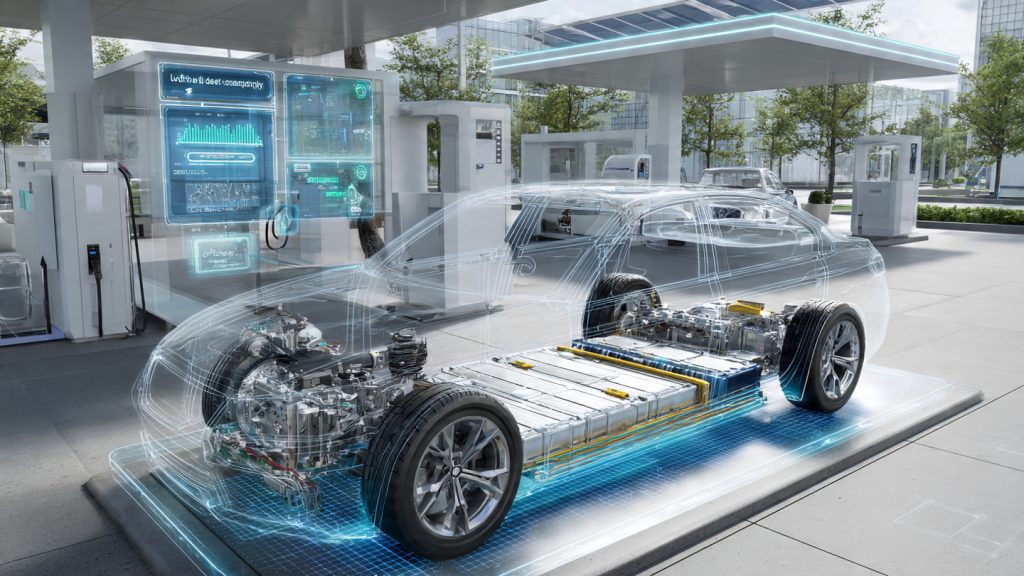
Batteries are the absolute bedrock of any electric vehicle. Without them, there’s no power. It’s where all that electricity is stored, ready to be sent to the motor when you press the accelerator. The type and capacity of the battery have a huge impact on how far you can go, how quickly you can recharge, and the overall performance of the car.
Contents
- 0.1 The Dominant Chemistry: Lithium-ion
- 0.2 Different Flavors of Motors: AC vs. DC
- 0.3 Powertrain Innovations: Thinking Holistically
- 0.4 The Charging Network: From Home to Public Stations
- 0.5 Environmental Impact: A Cleaner Drive
- 0.6 Policy and Adoption: Government’s Role
- 1 FAQs
- 1.1 1. What are the different types of electric vehicle motors?
- 1.2 2. How do batteries impact electric vehicle performance?
- 1.3 3. What are the advancements in electric vehicle powertrain systems?
- 1.4 4. What are the environmental benefits of electric vehicle technology?
- 1.5 5. How do government policies promote electric vehicle adoption?
The Dominant Chemistry: Lithium-ion
Right now, if you’re talking about EV batteries, you’re almost certainly talking about lithium-ion. This technology has really taken the lead because it offers a good balance of energy density (how much power it can hold for its size and weight), longevity, and relatively fast charging capabilities. While other battery chemistries exist and are being explored, lithium-ion is the workhorse of the EV world today.
How They Work: A Simplified Look
At its most basic, a lithium-ion battery works through the movement of lithium ions between two electrodes, an anode and a cathode, when it’s being charged or discharged. When you accelerate, these ions move from the anode to the cathode, releasing electrical energy. When you charge the car, the process is reversed, pushing the ions back. This is a simplified view, of course; the actual chemistry is quite complex and involves various materials and electrolytes to make it work efficiently and safely.
Battery Size and Range: The Direct Link
It’s pretty straightforward: a bigger battery generally means a longer driving range. Manufacturers build EVs with different battery sizes to cater to different needs and price points. A smaller battery might be sufficient for a city commuter who rarely drives long distances, while a larger one is essential for those who frequently embark on road trips. It’s a trade-off: more range usually means a higher cost and potentially more weight.
Charging Speed: A Critical Factor
How quickly you can replenish the battery is another major consideration. This is influenced by the battery’s chemistry, its management system, and the charging infrastructure itself. Faster charging is a huge selling point for EVs, as it helps alleviate “range anxiety” and makes them more convenient for longer journeys. Expect to see continuous improvements in this area.
Once the battery has done its job of storing and delivering electricity, it’s the motor’s turn. This is where the magic of converting electrical energy into mechanical energy that spins the wheels happens. EV motors are remarkably efficient and can deliver instant torque, which makes EVs feel very zippy right off the line.
Different Flavors of Motors: AC vs. DC
Electric motors for vehicles primarily fall into two broad categories: alternating current (AC) and direct current (DC). While DC motors were used in earlier EVs, AC motors, particularly induction motors and permanent magnet synchronous motors, have largely become the standard in modern vehicles.
AC Induction Motors: Robust and Reliable
AC induction motors are known for their durability and relatively lower cost. They generate a magnetic field that induces a current in the rotor, causing it to spin. They don’t rely on permanent magnets, which can sometimes be a sourcing concern. Many manufacturers use these for their ability to handle demanding conditions and for their overall reliability.
Permanent Magnet Synchronous Motors (PMSMs): Power and Efficiency
PMSMs often offer higher efficiency and a more compact design compared to induction motors. They use permanent magnets on the rotor to create a strong magnetic field, making them very responsive and powerful for their size. However, the reliance on rare-earth magnets can be a factor in their cost and supply chain.
Motor Control: The Brains of the Operation
It’s not just the motor itself but the sophisticated electronics that control it. Electronic controllers manage the flow of power from the battery to the motor, dictating speed, acceleration, and regenerative braking. This control system is crucial for maximizing efficiency and delivering a smooth driving experience.
The performance of an electric vehicle isn’t just about the battery or the motor in isolation. It’s about how these components, along with the entire powertrain and supporting systems, work together.
Powertrain Innovations: Thinking Holistically
Modern EVs are moving towards integrated powertrain systems. This means the motor, inverter (which converts DC from the battery to AC for the motor), and sometimes even the gearbox are designed to work seamlessly as a unit. This not only saves space and weight but also improves efficiency and performance. Manufacturers are constantly refining these integrated solutions.
The Quest for Efficiency: Every Watt Counts
Energy efficiency is paramount in EV design. Every aspect of the vehicle, from the aerodynamics to the rolling resistance of the tires, is scrutinized to eke out as much distance as possible from the stored energy. This is where the real innovation lies—making EVs go further and use less power.
Regenerative Braking: Capturing Lost Energy
One of the cleverest features of EVs is regenerative braking. When you lift your foot off the accelerator or apply the brakes lightly, the electric motor actually reverses its function and acts as a generator, slowing the car down while sending some of that kinetic energy back into the battery. This is a significant contributor to overall efficiency, especially in city driving with frequent stops and starts.
Thermal Management: Keeping Things Cool (and Warm)
Batteries and motors generate heat, especially under heavy load. Effective thermal management systems are crucial for maintaining optimal operating temperatures. This ensures longevity, consistent performance, and fast charging speeds. Imagine a car’s computer system; it needs to stay within a specific temperature range to function at its best.
It’s great to have a powerful EV, but you need somewhere to plug it in. The evolution of charging technology and infrastructure is just as important as the vehicles themselves.
The Charging Network: From Home to Public Stations
Charging happens in a few main ways. Most EV owners do the majority of their charging at home, overnight. This is usually done with a Level 1 (standard wall outlet) or Level 2 charger (a dedicated higher-voltage outlet, much faster). Public charging networks offer faster charging options, often referred to as DC fast charging or Level 3 charging, that can add significant range in a relatively short period.
Faster is Better: The Drive for Quick Top-Ups
The development of ultra-fast charging technology is a major focus. The goal is to reduce charging times to be comparable to refueling a gasoline car. This involves improvements in both the charging stations and the vehicle’s onboard charging hardware and battery systems.
Vehicle-to-Grid (V2G) and Vehicle-to-Home (V2H): Future Potential
Looking ahead, there’s a lot of interest in technologies like V2G and V2H. V2G allows EVs to not only draw power from the grid but also send it back, helping to stabilize the grid and potentially earn owners money. V2H allows the EV battery to power a home during an outage. These concepts are still developing but show exciting possibilities for integrating EVs into our energy systems.
The technology powering electric vehicles has a ripple effect that extends beyond just transportation.
Environmental Impact: A Cleaner Drive
The most frequently cited benefit of EVs is their reduced environmental impact. Because they don’t burn fossil fuels directly, they produce zero tailpipe emissions. While the electricity they use might come from various sources, including fossil fuels, the overall lifecycle emissions of EVs are generally lower than those of comparable gasoline cars, especially as grids become greener.
The Shift to Sustainable Energy Sources
The environmental benefit of EVs is magnified when the electricity used to charge them comes from renewable sources like solar and wind. This symbiotic relationship between renewable energy and EV adoption is a key driver in the transition to a more sustainable future.
Policy and Adoption: Government’s Role
Government policies play a significant role in encouraging the adoption of electric vehicles. This can include tax credits, subsidies, investments in charging infrastructure, and regulations that phase out internal combustion engine vehicles. These initiatives help make EVs more affordable and accessible, accelerating the transition.
Incentives and Regulations: Shaping the Market
From rebates that lower the upfront cost of buying an EV to mandates that require a certain percentage of new vehicle sales to be electric, governmental actions are crucial in moving the market towards electrification. These policies are designed to overcome barriers to adoption and encourage innovation.
The technology behind electric vehicles is a constantly evolving landscape. From the fundamental chemistry of batteries to the intricate control systems of electric motors and the expanding charging networks, it’s a fascinating area to watch. As these technologies mature and become more integrated, EVs are set to become an even more dominant and impressive part of our daily lives.
FAQs
1. What are the different types of electric vehicle motors?
There are three main types of electric vehicle motors: permanent magnet motors, induction motors, and switched reluctance motors. Each type has its own advantages and disadvantages in terms of efficiency, cost, and performance.
2. How do batteries impact electric vehicle performance?
Batteries play a crucial role in electric vehicle performance as they determine the range, charging time, and overall efficiency of the vehicle. Advancements in battery technology, such as higher energy density and faster charging capabilities, directly impact the performance of electric vehicles.
3. What are the advancements in electric vehicle powertrain systems?
Advancements in electric vehicle powertrain systems include the development of more efficient and compact motors, improved power electronics, and sophisticated control algorithms. These advancements contribute to better overall performance and energy efficiency in electric vehicles.
4. What are the environmental benefits of electric vehicle technology?
Electric vehicles produce zero tailpipe emissions, which helps reduce air pollution and greenhouse gas emissions. Additionally, the use of renewable energy sources for charging electric vehicles further enhances their environmental benefits.
5. How do government policies promote electric vehicle adoption?
Government policies such as incentives for electric vehicle purchases, investment in charging infrastructure, and regulations on emissions standards play a significant role in promoting electric vehicle adoption. These policies aim to accelerate the transition to cleaner and more sustainable transportation options.

With over 5 years of experience in digital learning and productivity, we specialize in creating practical and easy-to-follow solutions.Our expertise focuses on simplifying complex concepts into clear, actionable strategies for everyday use.We are committed to helping learners and professionals improve efficiency, build skills, and achieve consistent growth.