
From AI to Quantum Computing: The Future of Cybersecurity Technology
The world of cybersecurity is undergoing a massive transformation, driven by two incredibly powerful technologies: Artificial Intelligence (AI) and Quantum Computing. These aren’t just buzzwords; they’re fundamentally altering how we protect our digital lives and how attackers try to compromise them. In short, the future of cybersecurity is a dynamic interplay between these two forces, creating both unprecedented opportunities for defense and significant challenges we need to address head-on.
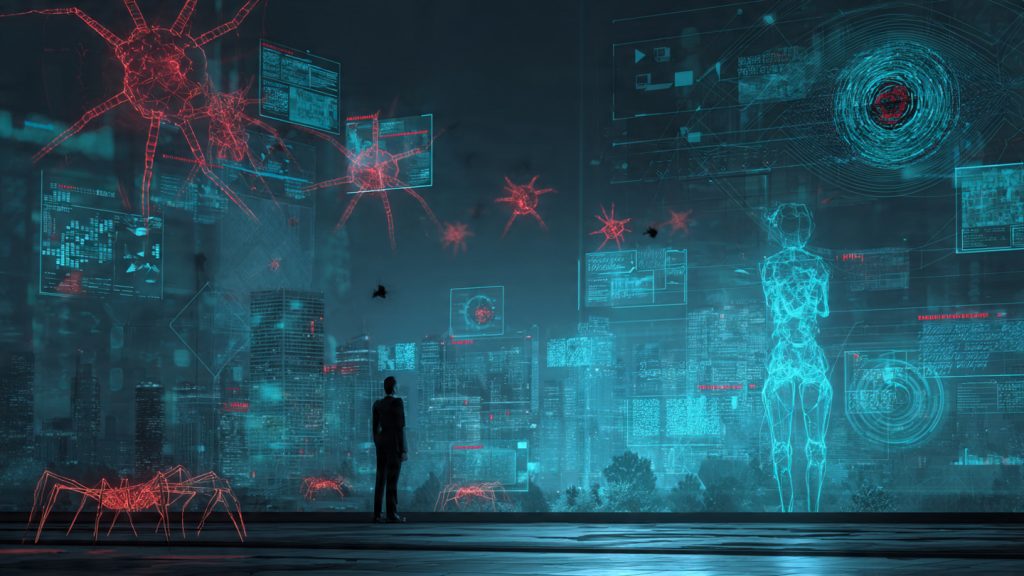
AI is no longer a futuristic concept; it’s already deeply embedded in many aspects of cybersecurity. We’re seeing AI evolve from simple automation to sophisticated analytical tools that can learn, adapt, and make decisions in real-time. This isn’t about replacing human analysts entirely, but rather augmenting their capabilities and giving them a crucial edge in a constantly evolving threat landscape.
Contents
- 0.1 The Rise of Artificial Intelligence in Cybersecurity
- 0.2 Machine Learning and its Impact on Cybersecurity
- 0.3 The Role of AI in Threat Detection and Prevention
- 0.4 Quantum Computing: A Game Changer for Cybersecurity
- 0.5 Quantum Computing’s Potential to Break Encryption
- 0.6 Quantum Cryptography: A New Frontier in Cybersecurity
- 0.7 The Intersection of AI, Quantum Computing, and Cybersecurity
- 0.8 Quantum-Safe Cryptography: Securing Data in the Age of Quantum Computing
- 0.9 Adapting to an Evolving Threat Environment
- 0.10 The Need for Collaboration and Standardization
- 1 FAQs
- 1.1 What is the role of artificial intelligence in cybersecurity?
- 1.2 How does quantum computing impact cybersecurity?
- 1.3 What is the intersection of AI, quantum computing, and cybersecurity?
- 1.4 How does machine learning impact cybersecurity?
- 1.5 What is quantum cryptography and its significance in cybersecurity?
The Rise of Artificial Intelligence in Cybersecurity
For quite some time now, AI, particularly machine learning, has been quietly, and not so quietly, transforming how we approach digital defense. Think about the sheer volume of data generated across networks, endpoints, and applications every second. No human, or team of humans, could possibly sift through all of that to identify anomalies. That’s where AI shines. It’s essentially an incredibly fast and accurate pattern recognition engine.
Machine Learning and its Impact on Cybersecurity
Machine learning, a subset of AI, is arguably the most impactful aspect of AI in cybersecurity today. It empowers systems to learn from data without explicit programming. This means feeding security systems vast amounts of normal network traffic, legitimate user behavior, and known attack patterns. The machine learning model then builds a baseline of what’s “normal.” When something deviates significantly from that baseline, it flags it as suspicious. This self-learning capability is crucial because attack methods are never static; they’re constantly evolving. Machine learning allows our defenses to evolve alongside them, albeit imperfectly.
The Role of AI in Threat Detection and Prevention
AI plays a pivotal role in detecting and preventing a wide array of cyber threats. For instance, in intrusion detection systems, AI can analyze network traffic for unusual patterns that might indicate a breach. This could be a sudden surge in data transfer to an unknown IP address or a user attempting to access resources they normally wouldn’t. AI also excels in phishing detection, analyzing email content, sender reputation, and links for tell-tale signs of malicious intent that might go unnoticed by human users. Furthermore, AI-powered endpoint detection and response (EDR) solutions are becoming incredibly effective at identifying and neutralizing threats directly on individual devices, often before they can cause significant damage. The ability of AI to process and correlate data from disparate sources, like logs, network flows, and behavioral analytics, provides a much more holistic view of potential threats than traditional signature-based systems ever could.
While AI is already here and making waves, quantum computing is still largely in its infancy, yet its potential impact on cybersecurity is monumental. It’s not just a faster computer; it’s a fundamentally different way of processing information, leveraging the bizarre rules of quantum mechanics.
Quantum Computing: A Game Changer for Cybersecurity
The phrase “game changer” might sound cliché, but for quantum computing in cybersecurity, it’s remarkably accurate. The power a quantum computer could wield is so immense that it threatens to render many of our current cryptographic standards obsolete. This isn’t something that will happen overnight, but the implications are so profound that we need to start preparing now. A sufficiently powerful quantum computer could theoretically break many of the encryption methods that secure our sensitive data today.
Quantum Computing’s Potential to Break Encryption
The most significant and often discussed threat from quantum computing is its ability to break commonly used encryption algorithms. Shor’s algorithm, for example, could efficiently factor large numbers, which is the mathematical basis for widely used public-key cryptography like RSSimilarly, Grover’s algorithm could significantly speed up brute-force attacks on symmetric-key encryption and hash functions. This means that data encrypted today, while seemingly secure, could potentially be decrypted by a quantum computer in the future if those algorithms are broken. This concept, often called “harvest now, decrypt later,” is a serious concern for long-lived sensitive data.
Quantum Cryptography: A New Frontier in Cybersecurity
Thankfully, the advent of quantum computing also brings with it the promise of new, quantum-safe cryptographic methods. Quantum cryptography isn’t about making existing encryption quantum-resistant; it’s about developing entirely new ways to secure communication using quantum mechanics. Quantum Key Distribution (QKD) is a prime example. QKD leverages the principles of quantum physics, specifically entanglement and superposition, to establish a secure cryptographic key between two parties. The beauty of QKD is that any attempt by an eavesdropper to intercept the key would inherently disturb the quantum state, making their presence detectable. This provides a level of security that is mathematically provable and immune to even the most powerful quantum computers. While currently complex and expensive to implement over long distances, QKD represents a fundamental shift in how we might secure communication in the future.
The real magic happens when we consider how AI and quantum computing can work together, or at least be considered in tandem, to create a more robust and resilient cybersecurity posture. It’s not just about defending against quantum threats; it’s about using these advanced technologies to build better defenses overall.
The Intersection of AI, Quantum Computing, and Cybersecurity
The intersection of AI, quantum computing, and cybersecurity is a complex, multi-faceted landscape. On one hand, AI can become an invaluable tool in the transition to quantum-safe cryptography. For instance, AI could be used to optimize the deployment of QKD networks, manage quantum key distribution, and even help in the development of new post-quantum cryptographic algorithms by accelerating the testing and validation processes. On the other hand, the threat posed by quantum computers means that AI security solutions themselves need to be robust enough to withstand quantum attacks, or at least be aware of the need for quantum-safe communication channels if they are handling sensitive data. This holistic view is crucial for effective future planning.
Quantum-Safe Cryptography: Securing Data in the Age of Quantum Computing
Given the looming threat of quantum computers breaking current encryption, the development and adoption of “quantum-safe cryptography” (also known as post-quantum cryptography or PQC) is an urgent priority. These are classical cryptographic algorithms designed to be secure against attacks from both classical and quantum computers. Organizations like NIST are actively evaluating and standardizing PQC algorithms, which are often based on complex mathematical problems that are thought to be hard even for quantum computers. The process of migrating to these new algorithms will be a massive undertaking, requiring careful planning, phased implementation, and significant investment. It’s not just about updating software; it involves rethinking entire cryptographic infrastructures, from hardware to protocols and applications.
Looking ahead, cybersecurity will be defined by how well we navigate the opportunities and challenges presented by AI and quantum computing. It’s not a matter of choosing one over the other; it’s about understanding their individual strengths and weaknesses, and how they interact.
Adapting to an Evolving Threat Environment
The cybersecurity landscape will continue to evolve at an accelerated pace. Attackers will undoubtedly leverage AI to develop more sophisticated and evasive attacks, including more convincing social engineering tactics and automated exploit generation. Simultaneously, the threat of quantum attacks looms, requiring a proactive approach to migrating to quantum-safe solutions. This demands continuous research, development, and a strong emphasis on education and training for cybersecurity professionals who will need to understand these complex technologies. We can’t afford to be reactive; we must anticipate and prepare.
The Need for Collaboration and Standardization
Success in this new era of cybersecurity will heavily rely on global collaboration and standardization. Governments, academic institutions, and private industry must work together to research and develop new security paradigms, share threat intelligence, and standardize quantum-safe cryptography. Without unified efforts, vulnerabilities and fragmentation will inevitably arise, leaving critical infrastructure and sensitive data exposed. The stakes are simply too high for isolated approaches. This means open-source development, collaborative research initiatives, and consistent international communication will be paramount in building a secure digital future.
FAQs
What is the role of artificial intelligence in cybersecurity?
Artificial intelligence plays a crucial role in cybersecurity by enabling automated threat detection, response, and prevention. AI can analyze large volumes of data to identify patterns and anomalies that may indicate potential security threats, helping organizations to proactively defend against cyber attacks.
How does quantum computing impact cybersecurity?
Quantum computing has the potential to break traditional encryption methods, posing a significant threat to cybersecurity. However, it also offers the promise of quantum-safe cryptography, which can secure data in the age of quantum computing by leveraging the principles of quantum mechanics to create unbreakable encryption.
What is the intersection of AI, quantum computing, and cybersecurity?
The intersection of AI, quantum computing, and cybersecurity represents a cutting-edge area of technological development. AI and quantum computing can be leveraged together to enhance cyber defense capabilities, with AI enabling intelligent threat detection and quantum computing offering advanced encryption solutions.
How does machine learning impact cybersecurity?
Machine learning plays a key role in cybersecurity by enabling systems to learn from data and improve their ability to detect and respond to security threats. By analyzing patterns and trends in data, machine learning algorithms can enhance the accuracy and efficiency of cybersecurity measures.
What is quantum cryptography and its significance in cybersecurity?
Quantum cryptography is a new frontier in cybersecurity that leverages the principles of quantum mechanics to secure communication and data transmission. It offers the potential for unbreakable encryption, making it a significant advancement in safeguarding sensitive information in the age of quantum computing.

With over 5 years of experience in digital learning and productivity, we specialize in creating practical and easy-to-follow solutions.Our expertise focuses on simplifying complex concepts into clear, actionable strategies for everyday use.We are committed to helping learners and professionals improve efficiency, build skills, and achieve consistent growth.