
Revolutionizing Industries: The Power of Autonomous Technology
Autonomous technology is rapidly reshaping pretty much every sector you can think of, from how we build things to how we get our food and even how we receive medical care. It’s not some far-off sci-fi dream anymore; it’s here, and it’s bringing some pretty significant changes with it. Think smarter factories, self-driving trucks, more precise farming, and even robots assisting in surgery. This isn’t just about making things faster; it’s about fundamentally altering processes, improving safety, and unlocking new levels of efficiency.
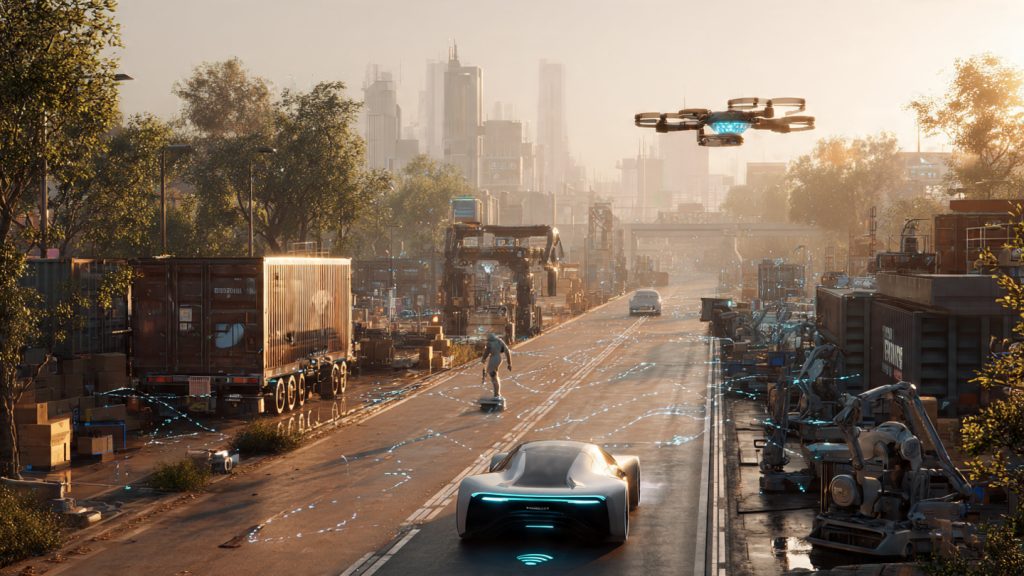
Autonomous technology, at its core, refers to systems that can operate and make decisions without direct human input. This is achieved through a combination of sensors, artificial intelligence (AI), machine learning, and sophisticated software. What’s exciting is its adaptability; it’s not a one-size-fits-all solution but a versatile toolkit that can be fine-tuned for an astonishing array of applications.
Contents
- 0.1 Manufacturing’s New Engine
- 0.2 Redefining Movement: Transportation and Logistics
- 0.3 Cultivating Smarter Fields: Agriculture’s Autonomous Revolution
- 0.4 The Human Touch, Enhanced: Healthcare and Medicine
- 0.5 Building Better, Safer, and Faster: Construction and Infrastructure
- 0.6 Powering Progress: The Energy and Utilities Sector
- 0.7 The Customer Experience, Evolved: Retail and Customer Service
- 0.8 Capturing Imagination: Entertainment and Media
- 0.9 Navigating the Road Ahead: Challenges and Opportunities
- 1 FAQs
- 1.1 What is autonomous technology?
- 1.2 How is autonomous technology revolutionizing industries?
- 1.3 In which industries is autonomous technology making a significant impact?
- 1.4 What are the challenges in embracing autonomous technology across industries?
- 1.5 What are the opportunities presented by autonomous technology across industries?
Manufacturing’s New Engine
Manufacturing has always been a prime candidate for automation, but autonomous tech takes it to an entirely new level. We’re moving beyond simple repetitive tasks to systems that can adapt, learn, and optimize production on the fly.
Smarter Factories, Better Products
Imagine robots that can not only assemble components but also inspect them for defects in real-time, adjusting their actions if something is off. This reduces waste, improves quality, and speeds up the entire production cycle. AI-powered systems can analyze vast amounts of data from sensors on the factory floor, predicting potential equipment failures before they happen, thus minimizing downtime. This proactive maintenance is a game-changer for productivity.
Collaborative Robotics (Cobots)
A key development is the rise of cobots. These are robots designed to work alongside humans, not replace them entirely. They can handle the physically demanding or repetitive parts of a job, freeing up human workers for more complex or skilled tasks. This collaboration enhances efficiency and can also improve workplace ergonomics and safety.
Redefining Movement: Transportation and Logistics
The impact of autonomous technology on how we move goods and people is perhaps one of the most visible transformations. Self-driving vehicles are no longer just concepts; they are beginning to navigate our roads and supply chains.
The Future of Freight
Autonomous trucks are poised to tackle long-haul routes, operating for extended periods without needing driver breaks. This can significantly improve delivery times and reduce labor costs. While full autonomy for all road conditions is still being refined, pilot programs are already demonstrating the potential for increased efficiency and reduced accidents due to factors like driver fatigue.
Streamlining the Supply Chain
Beyond the vehicles themselves, autonomous systems are optimizing warehousing and logistics. Automated guided vehicles (AGVs) and autonomous mobile robots (AMRs) can efficiently move inventory within warehouses, sort packages, and manage stock more accurately. This “lights-out” warehousing, where operations can continue with minimal human intervention overnight, is becoming a reality.
Cultivating Smarter Fields: Agriculture’s Autonomous Revolution
Farming, often seen as a traditional industry, is experiencing a significant technological leap thanks to autonomous systems, leading to what’s often called “precision agriculture.”
From Tractors to Drones
Autonomous tractors can plant, till, and harvest fields with incredible accuracy, adhering to precise rows and optimizing seed and fertilizer application. This reduces the need for manual labor, conserves resources, and can lead to higher yields. Drones equipped with sensors can monitor crop health, identify areas needing attention, and even spot pest infestations early on, allowing for targeted interventions.
Data-Driven Farming
The integration of AI and IoT devices in agriculture allows farmers to collect and analyze data on soil conditions, weather patterns, and crop growth. Autonomous systems use this information to make informed decisions about irrigation, fertilization, and pest control, leading to more sustainable and efficient farming practices.
The Human Touch, Enhanced: Healthcare and Medicine
While the idea of robots performing surgery might sound futuristic, autonomous technology is already making significant inroads into healthcare, aiming to improve patient outcomes and support medical professionals.
Assisting in the Operating Room
Robotic-assisted surgery has been around for a while, but advancements in AI are making these systems more intuitive and precise. They can offer surgeons enhanced dexterity and visualization, enabling minimally invasive procedures with faster recovery times for patients. These systems can also help with tasks like suturing and tissue manipulation with incredible steadiness.
From Diagnostics to Drug Discovery
AI is being used to analyze medical images like X-rays and MRIs, helping radiologists identify potential anomalies with greater accuracy and speed. Beyond diagnostics, autonomous systems are accelerating drug discovery by sifting through vast datasets to identify promising compounds and predict their efficacy, a process that used to take years.
Building Better, Safer, and Faster: Construction and Infrastructure
The construction industry, often characterized by manual labor and inherent risks, is finding new efficiencies and safety improvements through autonomous technology.
Automated Construction Processes
Think about 3D printing entire buildings or components, which autonomous systems can execute with precision. Drones are being used for site surveying, progress monitoring, and inspecting hard-to-reach areas, reducing the need for dangerous manual inspections. Autonomous excavators and bulldozers are also being developed to perform repetitive or hazardous tasks on construction sites.
Enhancing Infrastructure Maintenance
Autonomous robots can inspect bridges, tunnels, and pipelines for structural integrity, identifying cracks or corrosion long before they become critical issues. This proactive approach to maintenance can prevent catastrophic failures and save significant costs associated with emergency repairs.
Powering Progress: The Energy and Utilities Sector
From generating power to delivering it, autonomous technology is playing a crucial role in ensuring reliability and efficiency in the energy and utilities sector.
Optimizing Energy Grids
Autonomous systems can monitor and manage complex energy grids in real-time, predicting demand, optimizing energy distribution, and even responding to outages more quickly. This leads to a more stable and efficient power supply.
Renewable Energy Management
In the realm of renewables, autonomous drones can inspect wind turbines and solar panels for damage or performance issues, ensuring maximum energy output. AI can also be used to forecast energy generation from intermittent sources like solar and wind, allowing for better integration into the grid.
The Customer Experience, Evolved: Retail and Customer Service
The way we shop and interact with businesses is also being reshaped by autonomous technology, primarily focusing on convenience and personalization.
The Automated Store
From self-checkout systems to inventory management robots that keep shelves stocked, retail environments are becoming more automated. Some futuristic concepts even involve entirely cashier-less stores where AI tracks purchases as customers leave. Robots can also assist customers with product location or information within larger stores.
Smarter Customer Support
Chatbots and virtual assistants powered by AI are becoming increasingly sophisticated, handling customer inquiries, providing product information, and even resolving issues without human intervention. This frees up human customer service representatives to handle more complex or sensitive cases.
Capturing Imagination: Entertainment and Media
Even the creative and entertainment industries are seeing the influence of autonomous technology, particularly in content creation and delivery.
Content Generation and Enhancement
AI can be used to generate basic news articles, sports commentary, or even music. While human creativity remains paramount, these tools can assist in speeding up the production process or generating variations of existing content. In visual media, AI can assist with tasks like color grading, special effects, and even animation.
Personalized Experiences
Streaming services already use AI to recommend content, but this is likely to become even more sophisticated, offering highly personalized viewing and listening experiences based on individual preferences and even mood.
Despite the immense potential, fully integrating autonomous technology across industries isn’t without its hurdles.
Ethical and Societal Considerations
One of the biggest challenges is navigating the ethical implications. Questions around job displacement, data privacy, and algorithmic bias need to be addressed thoughtfully. The development of clear regulations and guidelines is crucial for responsible adoption.
The Need for Robust Infrastructure and Skills
For widespread adoption, significant investment in infrastructure is often required. This could include reliable high-speed internet, updated power grids, and specialized charging facilities. Furthermore, there’s a growing need for a skilled workforce capable of designing, operating, and maintaining these advanced systems. New job roles will emerge, requiring retraining and upskilling of the existing workforce.
Trust and Acceptance
Public trust and acceptance are also key. As autonomous systems become more prevalent, building confidence in their safety and reliability is paramount, especially in critical sectors like transportation and healthcare. Demonstrating consistent performance and transparent decision-making processes will be vital.
Ultimately, the rise of autonomous technology represents a significant paradigm shift. It’s not just about automating tasks; it’s about reimagining entire industries, unlocking new possibilities, and fundamentally altering the way we live and work. The journey is ongoing, filled with both exciting opportunities and important challenges, but the trajectory is clear: autonomy is here to stay, and its impact will only continue to grow.
FAQs
What is autonomous technology?
Autonomous technology refers to the use of artificial intelligence, robotics, and other advanced technologies to enable machines and systems to operate independently without human intervention.
How is autonomous technology revolutionizing industries?
Autonomous technology is revolutionizing industries by increasing efficiency, improving safety, reducing costs, and enabling new capabilities and services that were previously not possible with traditional methods.
In which industries is autonomous technology making a significant impact?
Autonomous technology is making a significant impact in various industries, including manufacturing, transportation and logistics, agriculture, healthcare, construction and infrastructure, energy and utilities, retail, entertainment and media, and more.
What are the challenges in embracing autonomous technology across industries?
Challenges in embracing autonomous technology across industries include concerns about job displacement, regulatory and legal hurdles, cybersecurity risks, ethical considerations, and the need for significant investment in infrastructure and training.
What are the opportunities presented by autonomous technology across industries?
Opportunities presented by autonomous technology across industries include increased productivity, improved safety, new business models and revenue streams, enhanced customer experiences, and the potential for significant advancements in various fields.

With over 5 years of experience in digital learning and productivity, we specialize in creating practical and easy-to-follow solutions.Our expertise focuses on simplifying complex concepts into clear, actionable strategies for everyday use.We are committed to helping learners and professionals improve efficiency, build skills, and achieve consistent growth.