Cloud Computing 2.0: How Emerging Technologies are Shaping the Future of Data Storage and Management
So, what exactly is “Cloud Computing 2.0,” and how is it changing the way we store and manage our data? Think of it as the next evolution of the cloud, where it’s not just about storing stuff remotely anymore. We’re talking about smarter, faster, more secure, and more integrated ways of handling information, all powered by exciting new technologies. It’s about making the cloud work harder and smarter for us.
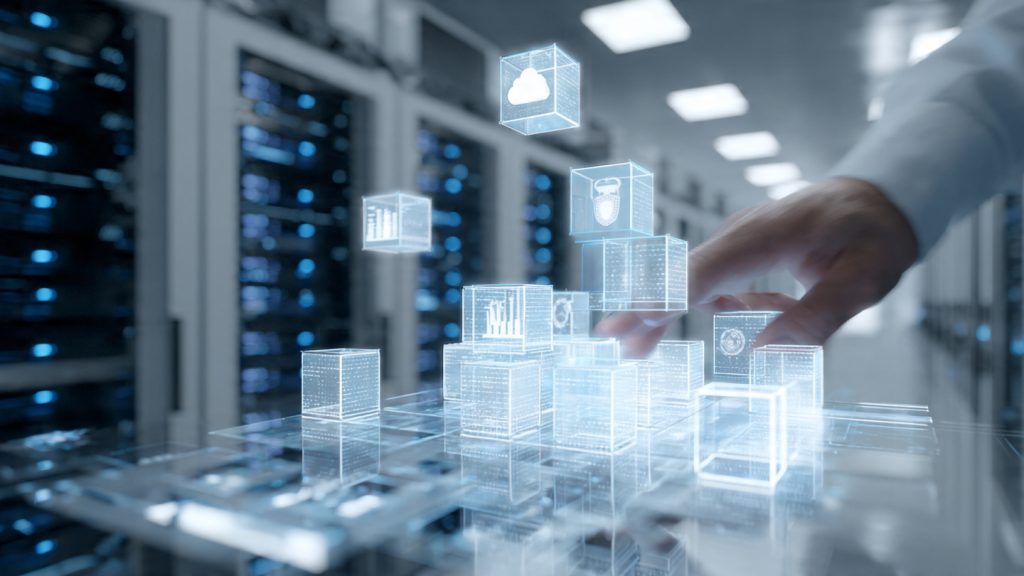
Before we dive into the “2.0” stuff, let’s quickly recap what cloud computing generally is. At its core, it means accessing computing resources—like servers, storage, databases, networking, software, analytics, and intelligence—over the internet (“the cloud”). Instead of owning and maintaining your own physical data centers and servers, you rent access to these resources from a cloud provider. This offers flexibility, scalability, and often cost savings. You can spin up new servers in minutes, scale your storage up or down easily, and focus on your actual work rather than IT maintenance. It’s been a game-changer for businesses of all sizes.
The cloud isn’t static; it’s constantly evolving. What’s driving this “Cloud Computing 2.0” transformation are advancements in technologies that were once niche but are now becoming mainstream. These aren’t just abstract concepts; they’re actively being integrated into cloud platforms, changing how data is stored, processed, and secured.
Contents
- 0.1 The Impact on How We Store Data
- 0.2 Revolutionizing How We Manage That Data
- 0.3 AI for Smarter Storage Decisions
- 0.4 AI as a Data Management Superpower
- 0.5 Enhanced Encryption is standard.
- 0.6 Proactive Threat Detection and Response
- 0.7 Managing the Deluge of IoT Data
- 0.8 IoT Data and AI: A Powerful Combination
- 0.9 Reducing Latency and Improving Responsiveness
- 0.10 The Edge and Cloud Complement Each Other
- 0.11 Flexible Workload Placement
- 0.12 Seamless Management and Orchestration
- 0.13 Immutable and Tamper-Proof Records
- 0.14 Enhanced Data Provenance and Trust
- 1 FAQs
- 1.1 What is cloud computing 2.0, and how is it shaping the future of data storage and management?
- 1.2 How is artificial intelligence impacting cloud computing?
- 1.3 What is the importance of security in the future of cloud computing?
- 1.4 How is the integration of Internet of Things (IoT) impacting cloud computing?
- 1.5 What is the role of blockchain in securing data in cloud computing?
The Impact on How We Store Data
The way we store data in the cloud is getting a serious upgrade. It’s not just about dumping files onto a virtual hard drive anymore. New technologies are making storage more intelligent, specialized, and efficient.
Smarter Storage Tiers
Cloud providers are offering a much wider range of storage options, tailored to different access needs.
Archival Storage Gets a Boost
For data you need to keep but rarely access, archival storage is becoming more cost-effective and accessible. Think of long-term backups or compliance data that needs to be retained for years. Technologies like new compression algorithms and more efficient data layouts are making these options incredibly budget-friendly.
Intelligent Tiering for Hot and Cold Data
Cloud platforms are now much better at automatically moving data between different storage tiers based on how often it’s accessed. This means your frequently used “hot” data stays on fast, accessible storage, while less active “cold” data gets moved to cheaper, slower storage without you lifting a finger.
Next-Generation Storage Architectures
The underlying technology that makes cloud storage work is also advancing.
Object Storage’s Continued Dominance
Object storage, built for unstructured data like images, videos, and backups, continues to be a cornerstone. Its scalability and flexibility are unmatched, especially as the volume of data explodes.
The Rise of Specialized Databases
Beyond raw storage, managing structured and semi-structured data is seeing innovation. We’re seeing more specialized databases designed for specific workloads, like time-series databases for IoT data or graph databases for complex relationships.
Revolutionizing How We Manage That Data
Beyond just storing it, cloud computing 2.0 is fundamentally changing how we interact with and leverage our data. It’s becoming more automated, insightful, and accessible.
Intelligent Automation and Orchestration
The tedious tasks of managing data are being automated.
AI-Powered Data Lakes
Data lakes, repositories for raw data in its native format, are becoming smarter. Artificial intelligence can now help to automatically catalog, tag, and even suggest how to analyze data within these lakes, making them far more usable.
Automated Data Pipelines
Setting up data flows from collection to analysis is being simplified. Cloud platforms offer services that can automate the creation and management of data pipelines, reducing manual configuration and potential errors.
Enhanced Data Governance and Compliance
Keeping data organized, secure, and compliant is a major focus.
Policy-Driven Management
Cloud environments allow for the definition of policies that automatically govern data access, retention, and deletion. This ensures compliance with regulations without constant manual oversight.
Data Lineage and Audit Trails
Understanding where data came from, how it was transformed, and who accessed it is crucial. Cloud services are improving their capabilities for tracking data lineage and providing comprehensive audit trails.
Artificial Intelligence (AI) and Machine Learning (ML) are arguably the biggest drivers of Cloud Computing 2.0. They’re not just applications on the cloud; they’re fundamentally integrated into the cloud infrastructure and services.
AI for Smarter Storage Decisions
AI is helping cloud storage work more efficiently.
Predictive Data Placement
AI algorithms can analyze access patterns to predict which data will be needed next, pre-emptively moving it to faster storage. This can significantly reduce latency for critical applications.
Automated Data Compression and Deduplication
AI can optimize data compression and identify duplicate data more intelligently than traditional methods, saving storage space and cost.
AI as a Data Management Superpower
This is where AI really shines. It’s transforming data from a static asset into an active source of intelligence.
Natural Language Processing for Data Interaction
Imagine querying your data using plain English instead of complex SQL. AI-powered natural language processing (NLP) is making this a reality, democratizing data access.
Advanced Analytics and Insight Generation
AI can sift through massive datasets to uncover patterns, anomalies, and trends that humans might miss. This leads to better decision-making across all areas of a business.
Automated Anomaly Detection and Threat Identification
AI can continuously monitor data for unusual activity, flagging potential security threats or operational issues before they become serious problems.
As data becomes more valuable and cloud infrastructure more complex, security is paramount. Cloud Computing 2.0 isn’t just about adding new features; it’s about building them on a rock-solid security foundation.
Enhanced Encryption is standard.
Encryption, both at rest and in transit, is no longer an optional add-on; it’s a fundamental requirement.
Advanced Key Management
Managing encryption keys securely is critical. Cloud providers are offering more sophisticated key management services that give users fine-grained control.
Homomorphic Encryption on the Horizon
While still emerging, homomorphic encryption allows computations to be performed on encrypted data without decrypting it, offering a new level of privacy for sensitive cloud workloads.
Proactive Threat Detection and Response
Moving beyond reactive security to proactive defense is key.
AI-Powered Security Analytics
Using AI to analyze security logs and network traffic for suspicious activity is becoming standard, allowing for faster identification and response to threats.
Identity and Access Management (IAM) Evolution
Controlling who has access to what is more complex than ever. Advanced IAM solutions in the cloud offer granular permissions and multi-factor authentication to protect data.
The Internet of Things (IoT) generates an unfathomable amount of data. The cloud is the logical place to store, process, and analyze this influx. Cloud Computing 2.0 is enabling a much tighter integration.
Managing the Deluge of IoT Data
IoT devices produce data at an unprecedented rate. The cloud provides the necessary infrastructure.
Scalable Ingestion and Processing
Cloud platforms are designed to handle the high-volume, high-velocity data streams from millions of IoT devices.
Real-time Analytics for Actionable Insights
Processing IoT data in near real-time allows for immediate insights and automated actions, such as predictive maintenance alerts or smart grid adjustments.
IoT Data and AI: A Powerful Combination
When you combine IoT data with AI, the possibilities are immense.
Predictive Maintenance
Analyzing sensor data from machinery can predict when a component is likely to fail, allowing for proactive repairs and avoiding costly downtime.
Smart Cities and Efficiency
IoT sensors in cities can monitor traffic, energy usage, and environmental conditions. AI analyzes this data to optimize city services and improve quality of life.
Edge computing sounds like it’s the opposite of the cloud, but it’s actually a crucial part of its evolution. It involves processing data closer to where it’s generated, rather than sending it all back to a central cloud data center.
Reducing Latency and Improving Responsiveness
For applications that require immediate feedback, sending data all the way to the cloud and back is too slow.
Real-time Decision Making
Autonomous vehicles, industrial automation, and critical healthcare monitoring systems rely on split-second decisions made at the edge.
Bandwidth Savings
Processing data at the edge can significantly reduce the amount of data that needs to be transmitted to the cloud, saving bandwidth and costs.
The Edge and Cloud Complement Each Other
Edge computing doesn’t replace the cloud; it complements it.
Distributed Data Processing
The edge handles immediate processing and filters data, sending only relevant or aggregated information to the central cloud for long-term storage and deeper analysis.
Offline Capabilities
Edge devices can continue to operate and make decisions even when network connectivity to the main cloud is temporarily lost.
Hybrid cloud solutions, which combine on-premises infrastructure with public cloud services, are becoming even more sophisticated and essential. Cloud Computing 2.0 is making these integrations smoother and more powerful.
Flexible Workload Placement
Organizations can choose the best environment for each application.
Sensitive Data On-Premises, Scalable Workloads in the Cloud
Mission-critical data can remain within an organization’s own secure data centers, while less sensitive or highly variable workloads can leverage the scalability of the public cloud.
Disaster Recovery and Business Continuity
Hybrid clouds offer robust options for backing up data and applications, ensuring business continuity in the event of an outage.
Seamless Management and Orchestration
Making hybrid environments work seamlessly is a key development.
Unified Management Tools
Cloud providers are offering tools that allow for the management of both on-premises and cloud resources from a single interface.
Data Portability and Interoperability
The ability to move data and applications between different cloud environments (both public and private) is becoming increasingly important.
Blockchain technology, often associated with cryptocurrencies, is finding new applications in cloud computing, particularly for enhancing data security and integrity.
Immutable and Tamper-Proof Records
The decentralized nature of blockchain creates a ledger that is incredibly difficult to alter.
Secure Audit Trails
All data operations can be recorded on a blockchain, creating an unalterable audit trail that proves the integrity of the data and who accessed it.
Supply Chain Transparency
For businesses tracking goods or data across multiple parties, blockchain can provide an auditable and transparent record.
Enhanced Data Provenance and Trust
Knowing the origin and history of data is crucial.
Verifying Data Authenticity
Blockchain can be used to verify the authenticity of data, ensuring it hasn’t been tampered with since its creation.
Secure Identity Management
Decentralized identity solutions built on blockchain could offer a more secure and user-controlled way to manage access to cloud services.
Cloud Computing 2.0 isn’t a destination; it’s a continuous journey. The integration of AI, IoT, edge computing, and blockchain is creating a more intelligent, secure, and versatile cloud infrastructure. This means businesses and individuals will have access to more powerful tools for data storage, management, and analysis than ever before. The cloud will continue to adapt, becoming even more deeply embedded in our digital lives, driving innovation and transforming how we interact with information.
FAQs
What is cloud computing 2.0, and how is it shaping the future of data storage and management?
Cloud computing 2.0 refers to the next phase of cloud technology, which incorporates emerging technologies such as artificial intelligence, Internet of Things (IoT), edge computing, and blockchain. These technologies are revolutionizing data storage and management by enabling more efficient, secure, and scalable solutions for businesses and individuals.
How is artificial intelligence impacting cloud computing?
Artificial intelligence is playing a significant role in cloud computing by enhancing automation, predictive analytics, and decision-making processes. AI-powered tools and algorithms are improving the efficiency and performance of cloud-based services, leading to better data management and insights for organizations.
What is the importance of security in the future of cloud computing?
Security is crucial in the future of cloud computing as more data is being stored and managed in the cloud. With the integration of emerging technologies, such as IoT and AI, the potential for security threats increases. Therefore, robust security measures and protocols are essential to safeguard sensitive information and ensure the integrity of cloud-based systems.
How is the integration of Internet of Things (IoT) impacting cloud computing?
The integration of IoT in cloud computing is enabling the collection, processing, and analysis of vast amounts of data from interconnected devices. This data is then stored and managed in the cloud, allowing for real-time insights, improved decision-making, and enhanced operational efficiency across various industries.
What is the role of blockchain in securing data in cloud computing?
Blockchain technology is being leveraged to enhance the security of data in cloud computing by providing a decentralized and tamper-proof system for storing and verifying information. By implementing blockchain-based solutions, organizations can ensure the integrity and confidentiality of their data, reducing the risk of unauthorized access or manipulation.

With over 5 years of experience in digital learning and productivity, we specialize in creating practical and easy-to-follow solutions.Our expertise focuses on simplifying complex concepts into clear, actionable strategies for everyday use.We are committed to helping learners and professionals improve efficiency, build skills, and achieve consistent growth.